How HubSpot Displaced Outbound Marketing as a Category Frame
Naming an enemy let HubSpot reshape how marketers understood their entire discipline.

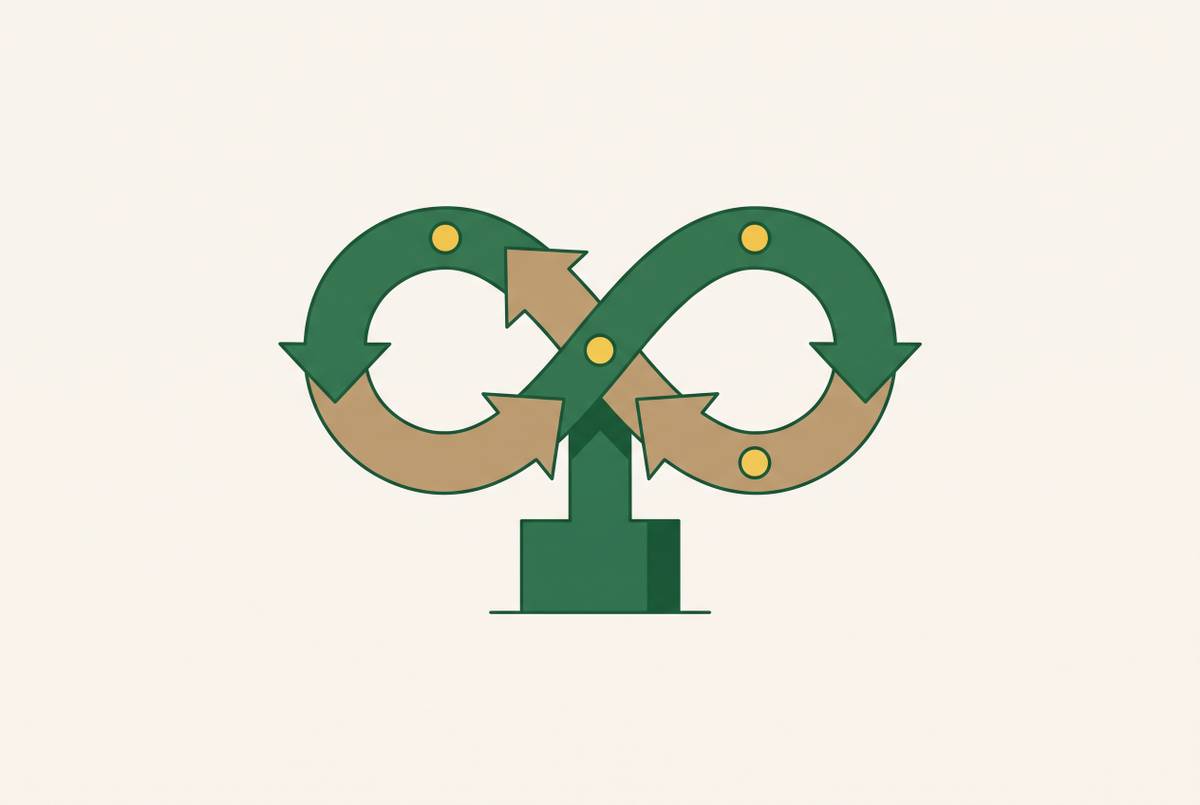
The standard marketing playbook was dying a slow, obvious death. Cold calls went to voicemail. Email open rates collapsed. Buyers were building what amounts to psychological armor against anyone trying to sell them something, and the tools of the trade, interruption and volume, kept working less and less. HubSpot's founding move was a naming decision that restructured how an entire industry understood what marketing was and who it was for. Brian Halligan and Dharmesh Shah, two MIT alumni, coined the term "inbound marketing" in 2006, and the term wasn't a product feature label so much as a worldview complete with a villain (interruption) and a hero (helpfulness). Halligan later summed up the logic in one line: what works when you're creating a category is having an enemy, and the enemy was outbound. People started asking how to do "this thing they call inbound marketing," and the answer was always HubSpot. Before the company existed, Shah's blog, OnStartups, had already proven the pull-based model by building 350,000 subscribers with no advertising budget, and HubSpot was, in effect, that proof institutionalized.
What naming an enemy does to a market
Giving the old way a name is what makes it beatable. Before HubSpot called it "outbound," there was no outbound category at all, there was just marketing, full stop, the water everyone swam in without noticing it. Naming it turned it into a choice, and anything that becomes a choice can be rejected. Category design theory calls this a "FroTo," a shift in a buyer's mental model from one frame to another, and HubSpot's FroTo moved buyers from "interrupting people at scale" to "attracting people at scale". HubSpot effectively built the contrast table itself: outbound meant cold outreach, interruption, and marginal efficiency gains over doing the same manual work faster; inbound meant SEO, content, and the ability to pull buyers toward the brand on their own terms. Each column made the other one make sense, and once buyers had a word for the thing they were tired of, they needed a word for the alternative, which HubSpot had conveniently already supplied.
This is why Halligan and Shah never bothered pitching HubSpot as a better Eloqua. Going feature-for-feature against an established incumbent is a losing bet for a startup, so instead of trying to win an existing argument, they changed what the argument was about, which made the incumbent beside the point rather than merely behind. The enemy framing did something else too: it gave a name to marketers who had been quietly suspicious of the old playbook for years, people who had watched 81% of buyers close a browser tab or flee a webpage rather than sit through a pop-up ad, and who finally had a framework to rally behind instead of just a grievance.
Making the category a public good while keeping the advantage
The strangest, smartest part of the whole story is what HubSpot didn't do. Halligan and Shah never trademarked "inbound marketing," never tried to fence it in, and actively wanted every agency, blogger, consultant, and solo founder on the internet using the phrase. The logic was that if inbound marketing became a thing businesses genuinely wanted, a demand strong enough to eventually pull 24,000 people into the INBOUND conference by 2018, HubSpot would be the company most synonymous with it, collecting the benefit of category growth even on the days someone else was doing the teaching. That gave the category an asymmetry baked into its foundation. Competitors who tried to compete inside the inbound frame were, by definition, reinforcing HubSpot's version of the map, and competitors who ignored the frame entirely were simply speaking a language nobody in the room understood anymore. Salesforce could out-engineer HubSpot on CRM capability every day of the week, and it wouldn't matter, because inside the inbound frame Salesforce was forever playing catch-up in a category somebody else had already named. Most marketing strategies fight over demand that already exists. HubSpot's strategy manufactured demand for an entirely new way of thinking about marketing and simultaneously installed itself as the default answer inside that new way of thinking. The less HubSpot tried to possess the word "inbound," the more completely the word pointed back to HubSpot.
The content engine, the book, and the conference as language infrastructure
A worldview is only as strong as the plumbing that carries it. HubSpot's content program, its 2009 book, and its INBOUND conference functioned as the infrastructure that kept the category language alive and self-sustaining. Every sales conversation in a new category starts with an unpaid tax: someone has to explain why the old way is broken before anyone can pitch the new way.
The book did the same job for credibility. Inbound Marketing: Get Found Using Google, Social Media, and Blogs, published in 2009, wasn't really about publishing new ideas, it was a calculated act of setting the canonical vocabulary for a movement that was already forming and getting there before any competitor could write the dictionary first. INBOUND the conference turned the whole thing physical. Every attendee walked in as a future customer, advocate, or hire; every session on the agenda quietly validated HubSpot's philosophy; and the sheer existence of an annual gathering with a name matching the category signaled that inbound marketing had become serious and permanent. By 2018, 24,000 people showed up, a number that worked as proof the category had reached real scale, not just a headcount for the badge printer. The blog ranked for every query a marketer could type, the book gave authority, the conference gave community, and together they formed a closed loop that kept HubSpot at the center of every conversation about the category it had named.
What category ownership delivers: pricing power and structural defensibility
Owning the frame that a market uses to evaluate itself produces a kind of defensibility that no feature roadmap can replicate, because it changes the axis the market measures everyone against. Category creation handed HubSpot pricing power, market positioning, and a competitive moat that straight feature competition simply could not touch, because the fight was never about CRM capability, it was about whether a company believed in inbound methodology at all. Ask "which marketing automation tool is best" and Eloqua and HubSpot stand on equal footing as peers. Owning the category changes the question a buyer thinks to ask, so "how do I do inbound marketing" has only one answer in the room. HubSpot grew to a $20+ billion company, and that valuation reflects not just product capability but the market structure the company authored. The SMB bet compounded the advantage: while competitors fought each other over enterprise accounts, HubSpot built a blue ocean among small and medium-sized businesses where its frame was the only one operating, unchallenged. None of this is a story about a slicker ad campaign. It's a story about a company that built the measuring stick and then happened to be the thing that measured best against it.
When the category frame ages: HubSpot's own language debt
Language, like software, accrues debt when nobody maintains it. HubSpot's own experience after 2023 is the proof: category frames are not permanent fixtures, they need active upkeep, and left unserviced they rack up language debt at roughly the same rate they once generated value. HubSpot's stock fell sharply as generative AI disruption spread and customers started wondering whether they could just build their own marketing tools with AI instead of paying for HubSpot's platform. That's the quiet, unglamorous part of language debt: it never announces itself with a press release. The frame that once organized an entire market simply stops matching the world buyers are actually living in, and by the time the mismatch becomes visible in a stock chart, the debt has already been accumulating for a while. Any company running on a canonical narrative faces the same math. A story that goes unmaintained drifts slowly away from the product it was built to describe, and that drift erodes pricing power, sales velocity, and internal alignment long before anyone notices it on a balance sheet.
Rewriting the category a second time with UNBOUND 2026
The rebrand from INBOUND to UNBOUND is a second act of category displacement, except this time the thing being displaced is HubSpot's own earlier frame. After 15 years running the show as "INBOUND," HubSpot's flagship event officially became HubSpot UNBOUND 2026. The company's own rationale: INBOUND is becoming UNBOUND because growth no longer fits inside a single framework or function, and the business now spans marketing, sales, service, and operations across the whole customer journey in an AI-driven environment.
The idea didn't start as a tagline. It started as a February 2023 internal memo from Sunil Desai, SVP of marketing, and Kat Tooley, VP of Global Events and Experiential Marketing, proposing the word "Unbound" to capture the promise of limitless potential, years before it became a public rebrand. Tooley later described the thinking behind it directly: the old playbooks don't work anymore in an AI-first transformation, and that demands openness not just to more playbooks, but to more possibilities. The language arrived well before the product caught up to it. CEO Yamini Rangan framed the new category gap in plain terms: most companies are now using AI in some form, but only a small fraction report outcomes that actually transform the business, and that adoption-to-impact gap is exactly the territory UNBOUND is built to claim.
The parallel to 2006 lines up almost exactly. Back then, HubSpot named the gap between what marketing was actually doing, interrupting people, and what it could be doing, attracting them. Now it is naming the gap between AI adoption and AI impact, and positioning itself as the bridge across that gap. The time between the internal memo and the public rebrand reflects how long it takes for a language move to become a market move: the narrative infrastructure had to be built before the category could be claimed.
Lessons for companies trying to own a market rather than compete in one
The HubSpot story isn't a content marketing case study to file away and forget. It demonstrates that language architecture behaves like a strategic asset in the fullest sense: it compounds, it drifts, and it needs active governance the same way a piece of technical infrastructure does. In 2006, category creation starts with naming, not with product: the question isn't "what is our product better at," it's "what frame should buyers use to evaluate this entire space in the first place." HubSpot gave the term "inbound marketing" away for free rather than guarding it, and that is the counterintuitive second lesson. That giveaway wasn't generosity for its own sake, it was the actual mechanism that let the naming move spread far enough to become inseparable from the company that coined it, proof that a category leader strengthens its position precisely by not trying to fence the language in. The third lesson shows up in the blog, the book, and the conference working as one system: a single clever campaign fades, but language infrastructure, built in layers that reinforce each other over years, is what makes category ownership durable instead of a one-season win. Owning the frame a market uses to judge itself produces pricing power and defensibility that no amount of feature-matching can buy, because it changes the question customers ask before they ever compare a spec sheet; that is the fourth lesson, financial and structural at once. HubSpot's own post-2023 stretch supplies the sobering evidence for the fifth lesson: a category frame is not a trophy that sits on a shelf forever, it is closer to a living system that needs maintenance, and skipped maintenance accrues as debt that becomes visible in a stock price. The sixth lesson closes the loop: the UNBOUND rebrand proves that the exact same instinct that built the company in 2006, naming a gap nobody else had named yet, is also the tool for keeping a category current twenty years later. Any founder, CEO, or investor facing the choice HubSpot faced back then is really facing the same question now: whether to fight over territory the competition already occupies, or to name a piece of ground nobody has claimed yet and let the market come find the name.
Sources
- HubSpot: An Underdog Helps Invent Modern Marketing—and Then Takes on Goliath HubSpot: An Underdog Helps Invent Modern Marketing—and Then Takes on Goliath
- Quit Battling Over Market Share With Category Design
- The History of Inbound Marketing - Who Invented it?
- The Blog That Beat Cold Calling: The Origin Story of HubSpot